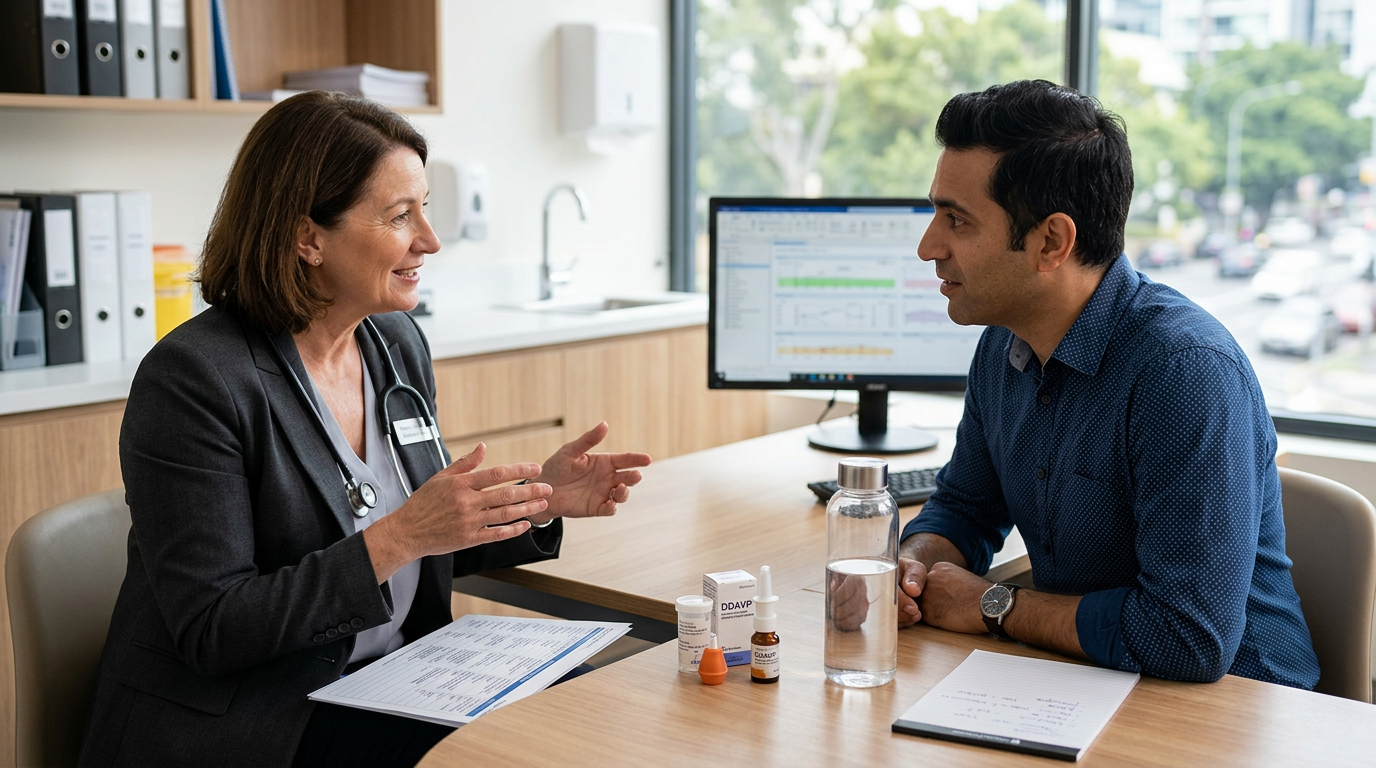
Diabetes Insipidus Treatment: Managing Fluid Balance Safely

Dr. Brian Karaan
Author
Understanding Diabetes Insipidus Treatment and Management
While it shares a name with the more common "sugar diabetes," diabetes insipidus treatment focuses on a completely different biological mechanism. This rare condition involves how your kidneys handle fluids, rather than how your body processes glucose.
When you have diabetes insipidus, your body cannot properly balance fluid levels, leading to extreme thirst and excessive urination. Understanding the cause of your specific type is the first step toward effective management and reclaiming your quality of life.
The Four Types of Diabetes Insipidus
Treatment strategies depend entirely on which of the four types of the condition you have. Each type stems from a different breakdown in the fluid-regulation process.
Central diabetes insipidus is caused by damage to the pituitary gland or hypothalamus. This damage disrupts the production or release of vasopressin (ADH), the hormone that tells your kidneys to retain water.
Nephrogenic diabetes insipidus occurs when your kidneys are unable to respond to vasopressin. In this case, the hormone levels are normal, but the "biological receiver" in the kidneys is broken.
Rare Variations
Dipsogenic diabetes insipidus is related to a defect in the thirst mechanism in the hypothalamus. This causes you to feel abnormally thirsty even when your body doesn't need more fluid.Gestational diabetes insipidus occurs only during pregnancy. It happens when an enzyme made by the placenta destroys the mother's vasopressin.
Standard Diabetes Insipidus Treatment Options
The primary goal of any treatment plan is to reduce the amount of urine your body produces and prevent dangerous dehydration. Your doctor will tailor the approach based on the underlying cause.
Hormone Replacement Therapy
For central diabetes insipidus, the most common treatment is desmopressin. This is a synthetic hormone that replaces the missing vasopressin in your system.It can be administered as a nasal spray, oral tablet, or injection. By mimicking the natural hormone, it restores the message to the kidneys to conserve water.
Managing Nephrogenic DI
Since the kidneys don't respond to hormones in nephrogenic DI, doctors often suggest a low-salt diet to reduce the workload on the kidneys.In some cases, specific diuretics (water pills) are used paradoxically to reduce urine output. Anti-inflammatory medications may also help increase the kidneys' sensitivity to remaining fluids.
Lifestyle Adjustments and Safety
Beyond medication, managing diabetes insipidus requires constant awareness of your body's hydration status. Dehydration can happen rapidly if you do not have access to water.
Treatment is usually lifelong for central and nephrogenic types. However, with the right medication and lifestyle habits, most people live full, active lives.
Comparing Diabetes Insipidus and Diabetes Mellitus
It is a common misconception that these conditions are the same. Diabetes mellitus (Type 1 and Type 2) involves high blood sugar due to insulin issues.
In contrast, diabetes insipidus is purely a water-regulation issue. However, both conditions can cause extreme thirst and frequent urination, which is why a proper clinical diagnosis is vital for receiving the correct care.
While diabetes insipidus focuses on the kidneys' water retention, maintaining overall metabolic health is essential for any patient dealing with chronic fluid issues. Supporting the gut-kidney axis can often help stabilize the body's internal environment. GutGlucose was designed by Dr. Brian Karaan to address the foundational bacterial health that influences how our bodies signal and process essential nutrients. For those also managing blood sugar concerns alongside metabolic stressors, the targeted-release compounds in GutGlucose offer a way to rebuild internal coordination starting from the microbiome.
These statements have not been evaluated by the Food and Drug Administration. This product is not intended to diagnose, treat, cure, or prevent any disease.


Comments (0)
Log in to leave a comment
No comments yet. Be the first to comment!

Dr. Brian Karaan
Dr. Brian Karaan, MD. Mayo Clinic alumni. Functional medicine physician in Denver, CO for 28 years. Spent 22 years developing the gut-based protocol that Harvard confirmed in 2024. Treated 4,000+ patients. Created Sugar Harmony to bring the protocol to everyone who needs it.
View all posts
The Gut-Glucose Connection: What Controls Your Blood Sugar More Than Anything You've Been Prescribed
- The 5 foods that secretly spike your blood sugar
- The gut-glucose connection Harvard confirmed in 8,000 diabetics — and your doctor never mentioned
- The 3 bacterial failures happening in your gut right now that no medication is fixing
- Dr. Karaan's 3-day gut reset protocol to stop the damage before it goes further
- The morning routine that prepares your gut to regulate glucose before your first meal
- Why metformin, Ozempic, and every diet you've tried were aimed at the wrong organ
- The natural compounds that target the root cause — not the symptom