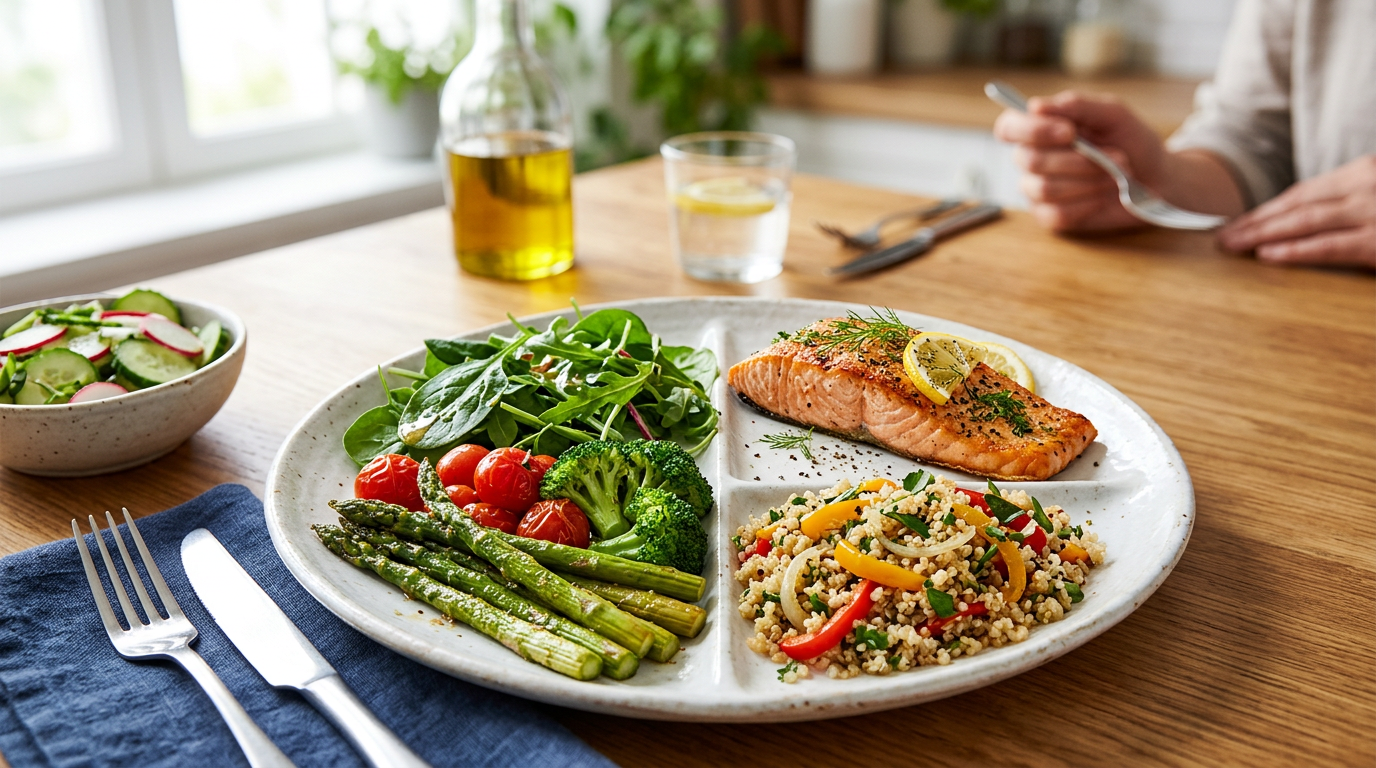
Mastering the Diabetes Plate Method for Blood Sugar Control

Dr. Brian Karaan
Author
How to Master the Diabetes Plate Method for Blood Sugar Control
Managing your diet can often feel like a complicated math equation involving grams, calories, and glycemic indexes. However, the diabetes plate method offers a refreshingly simple way to visualize your meals without the need for constant counting or measuring.
By focusing on the proportions of different food groups on your plate, you can naturally manage your blood sugar levels while still enjoying satisfying, delicious meals. This visual tool is designed to provide a balanced intake of fiber, protein, and healthy carbohydrates.
What is the Diabetes Plate Method?
The diabetes plate method is a visual guide created to help people with type 2 diabetes and prediabetes manage their portion sizes. It shifts the focus from "what you can't eat" to "how much of each group" should be on your plate.
The core philosophy relies on the idea that most of us eat too many refined starches and not enough fibrous vegetables. By rebalancing these ratios, you slow down the absorption of glucose into your bloodstream.
This method works for breakfast, lunch, and dinner, and it is flexible enough to accommodate various cultural cuisines and personal preferences. All you need is a standard 9-inch dinner plate.
Step 1: Fill Half Your Plate with Non-Starchy Vegetables
The most critical step in the diabetes plate method is dedicating 50% of your plate to non-starchy vegetables. These foods are high in vitamins, minerals, and fiber while being very low in calories and carbohydrates.
Fiber is your best friend when managing diabetes because it slows down digestion. This prevents the sharp "spikes" in blood glucose that often occur after eating a heavy meal.
Examples of non-starchy vegetables include:
- Leafy greens like spinach, kale, and collards
- Broccoli and cauliflower
- Peppers, tomatoes, and onions
- Green beans, asparagus, and zucchini
Step 2: Fill One Quarter with Lean Protein
Protein is essential for muscle repair and immune function, but it also plays a vital role in satiety. Adding a lean protein source to your meal helps you feel full longer and reduces the urge to snack on sugary treats later.
For this quarter of your plate, focus on high-quality sources that are low in saturated fat. Keeping fat intake in check is important for heart health, which is a major concern for those managing diabetes.
Excellent protein choices include:
- Chicken or turkey (without the skin)
- Fish and shellfish
- Eggs or egg whites
- Plant-based proteins like tofu, tempeh, or beans
Step 3: Fill One Quarter with Carbohydrates
Carbohydrates have the biggest impact on your blood sugar, which is why they are limited to just 25% of your plate. However, rather than eliminating them, the goal is to choose "complex" carbohydrates that digest slowly.
Complex carbs contain more fiber and nutrients than their refined counterparts (like white bread or white rice). This section can also include starchy vegetables, which provide energy but need to be portion-controlled.
Try these carbohydrate options:
- Whole grains like brown rice, quinoa, or oats
- Starchy vegetables like sweet potatoes or pumpkin
- Legumes such as lentils, chickpeas, and black beans
- Small portions of whole-fruit or berries
Healthy Fats and Hydration
While they don't have a dedicated "section" on the plate, healthy fats are a necessary part of a balanced diet. Use small amounts of olive oil, avocado, or nuts to add flavor and further slow glucose absorption.
For your beverage, stick to zero-calorie options. Water is always the best choice, but unsweetened tea or sparkling water with a squeeze of lemon can provide variety without adding hidden sugars to your daily total.
Practical Tips for Success
By mastering the diabetes plate method, you gain a portable skill that works at home, at restaurants, and at social gatherings. It empowers you to take control of your metabolic health one meal at a time.
While visual portion control is a powerful foundation, the science of the "gut-glucose connection" suggests that how our bodies process these portions depends heavily on our internal bacterial balance. If your gut microbiome is compromised, even a perfect plate may not prevent glucose spikes. Integrating a tool like GutGlucose can help rebuild the bacterial colonies necessary for proper insulin signaling that starts in the digestive tract. By combining the GutGlucose protocol with the plate method, you address blood sugar management from both the outside in and the inside out.
These statements have not been evaluated by the Food and Drug Administration. This product is not intended to diagnose, treat, cure, or prevent any disease.


Comments (0)
Log in to leave a comment
No comments yet. Be the first to comment!

Dr. Brian Karaan
Dr. Brian Karaan, MD. Mayo Clinic alumni. Functional medicine physician in Denver, CO for 28 years. Spent 22 years developing the gut-based protocol that Harvard confirmed in 2024. Treated 4,000+ patients. Created Sugar Harmony to bring the protocol to everyone who needs it.
View all posts
The Gut-Glucose Connection: What Controls Your Blood Sugar More Than Anything You've Been Prescribed
- The 5 foods that secretly spike your blood sugar
- The gut-glucose connection Harvard confirmed in 8,000 diabetics — and your doctor never mentioned
- The 3 bacterial failures happening in your gut right now that no medication is fixing
- Dr. Karaan's 3-day gut reset protocol to stop the damage before it goes further
- The morning routine that prepares your gut to regulate glucose before your first meal
- Why metformin, Ozempic, and every diet you've tried were aimed at the wrong organ
- The natural compounds that target the root cause — not the symptom