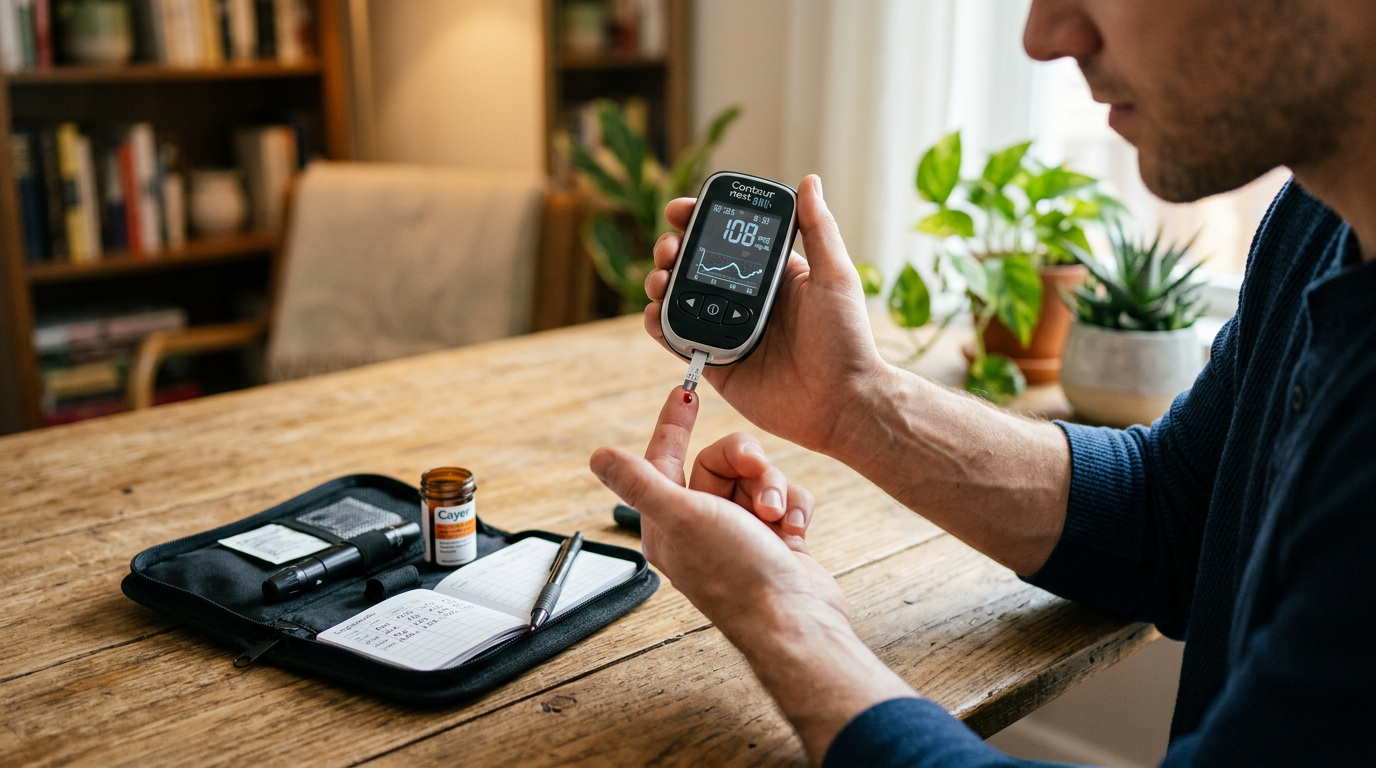
Mastering Your Glucose Meter: A Guide to Better Blood Sugar

Dr. Brian Karaan
Author
How to Use a Glucose Meter for Better Blood Sugar Control
Understanding your body’s unique response to food, exercise, and stress is the cornerstone of managing metabolic health. A glucose meter is the most essential tool in your kit for gaining this clarity. It provides real-time data that helps you and your doctor make informed decisions about your daily routine.
Testing your blood sugar might feel intimidating at first, but it quickly becomes a simple habit. By monitoring your levels regularly, you can identify patterns that might otherwise go unnoticed. This proactive approach allows you to take control of your health before small fluctuations become larger problems.
Choosing the Right Glucose Meter for Your Needs
Not all blood sugar monitors are created equal, and the best one for you depends on your lifestyle. Most modern devices are compact and offer features like backlit screens, large memory storage, and Bluetooth connectivity. Some even sync directly with smartphone apps to create digital logs of your readings.
When selecting a glucose meter, consider the cost of the test strips, as these are an ongoing expense. You should also look at the sample size required; many newer meters only need a tiny drop of blood. Consistency is key, so choose a device that you find easy to calibrate and operate every day.
Step-by-Step Guide to Accurate Testing
To get the most accurate results, you must follow a clean and consistent testing procedure. Inaccuracy often stems from external factors rather than the device itself. Follow these steps for the best results:
Record your results along with a brief note about what you recently ate or your current activity level. This context is what turns a simple number into actionable health data.
When is the Best Time to Test?
The timing of your tests depends on your specific health goals and your doctor's recommendations. However, most people find the most valuable data comes from testing at these "vantage points":
Common Factors That Affect Your Readings
It is important to remember that a glucose meter reading is a snapshot in time. Various factors can cause temporary spikes or dips that aren't necessarily related to your last meal. For example, extreme temperatures can affect the chemistry of the test strips, leading to false readings.
Physical stress, illness, and even dehydration can also impact your blood sugar levels. If you see a number that feels "off," consider these variables before panicking. Always double-check your result with a second test if the number doesn't match how you feel physically.
Interpreting Your Glucose Data Trends
A single high or low reading is rarely a cause for alarm, but a trend of high readings tells a story. Look for patterns over the course of a week. Do your levels always spike after a certain "healthy" snack? Does a morning walk significantly lower your fasting numbers?
By using your glucose meter to map these trends, you can customize your diet and lifestyle. Instead of following generic advice, you are following the data provided by your own biology. This personalized approach is far more effective for long-term blood sugar stability.
Effective management is about more than just checking numbers; it’s about addressing the root cause of why those numbers might be fluctuating. While a glucose meter tracks the sugar currently in your blood, the underlying health of your gut microbiome plays a massive role in how that sugar is processed. Research shows that a healthy gut environment is essential for proper insulin signaling. Using a high-quality support like GutGlucose can help rebuild the bacterial colonies that coordinate your body's sugar response. By combining the data from your GutGlucose protocol with daily monitoring, you can work toward more consistent, healthy readings.
These statements have not been evaluated by the Food and Drug Administration. This product is not intended to diagnose, treat, cure, or prevent any disease.


Comments (0)
Log in to leave a comment
No comments yet. Be the first to comment!

Dr. Brian Karaan
Dr. Brian Karaan, MD. Mayo Clinic alumni. Functional medicine physician in Denver, CO for 28 years. Spent 22 years developing the gut-based protocol that Harvard confirmed in 2024. Treated 4,000+ patients. Created Sugar Harmony to bring the protocol to everyone who needs it.
View all posts
The Gut-Glucose Connection: What Controls Your Blood Sugar More Than Anything You've Been Prescribed
- The 5 foods that secretly spike your blood sugar
- The gut-glucose connection Harvard confirmed in 8,000 diabetics — and your doctor never mentioned
- The 3 bacterial failures happening in your gut right now that no medication is fixing
- Dr. Karaan's 3-day gut reset protocol to stop the damage before it goes further
- The morning routine that prepares your gut to regulate glucose before your first meal
- Why metformin, Ozempic, and every diet you've tried were aimed at the wrong organ
- The natural compounds that target the root cause — not the symptom