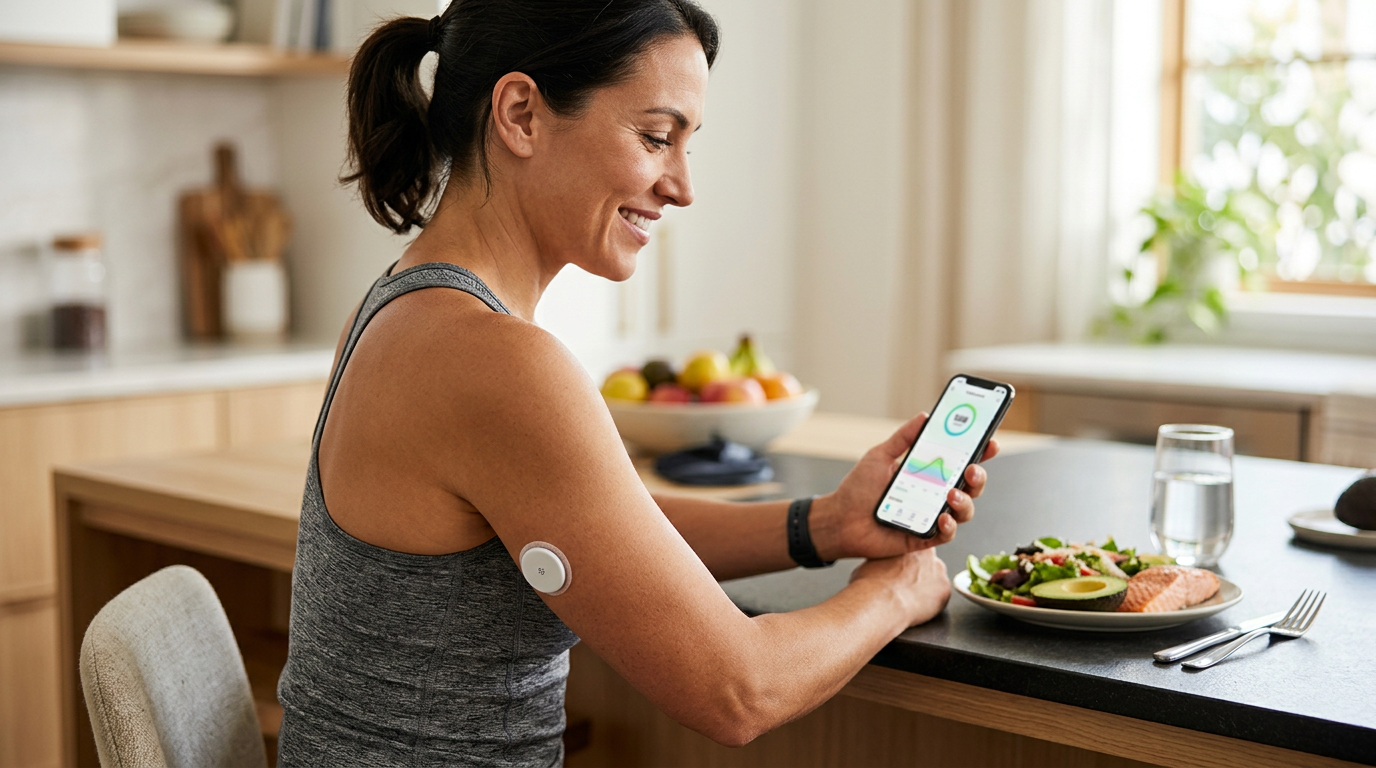
Mastering Your Health with Continuous Glucose Monitoring (CGM)

Dr. Brian Karaan
Author
Why Continuous Glucose Monitoring Is Changing Diabetes Care
Maintaining healthy blood sugar levels is a lifelong journey that requires constant attention and precise data. For decades, the standard of care involved painful finger pricks that only provided a "snapshot" of a single moment in time.
Fortunately, continuous glucose monitoring (CGM) has revolutionized how patients and doctors approach metabolic health. By providing real-time data every few minutes, these devices offer a comprehensive look at how your body responds to food, stress, and exercise.
What is a Continuous Glucose Monitor (CGM)?
A CGM is a small, wearable medical device that tracks your glucose levels 24 hours a day. Unlike traditional meters, it uses a tiny sensor inserted under the skin—usually on the arm or abdomen—to measure glucose in the interstitial fluid.
The sensor sends data wirelessly to a smartphone or a dedicated receiver. This allows you to see your glucose trends in a continuous line, showing whether your levels are rising, falling, or staying stable.
By using continuous glucose monitoring, you can identify patterns that a single finger prick would completely miss, such as a sharp spike after lunch or a dangerous dip in the middle of the night.
The Key Benefits of Real-Time Data
The primary advantage of using a CGM is the ability to make "in-the-moment" decisions. Instead of guessing why you feel sluggish, you can look at your device and see exactly where your blood sugar stands.
1. Identifying Glycemic Variability
Glycemic variability refers to the "ups and downs" your blood sugar takes throughout the day. High variability is often more damaging to blood vessels than a steady, slightly elevated level.2. Immediate Feedback on Diet
Have you ever wondered if that "healthy" smoothie is actually causing a massive spike? A CGM provides instant feedback, allowing you to tailor your nutrition to your specific biology.3. Alarm Systems for Safety
Most modern monitors include customizable alarms. They can alert you if your glucose is dropping too low (hypoglycemia) or climbing too high (hyperglycemia), preventing medical emergencies before they happen.Understanding the Gut-Glucose Connection
While tracking your numbers is essential, it is equally important to understand what drives those numbers from within. Recent medical breakthroughs at institutions like Harvard and MIT have highlighted the gut-glucose connection.
The gut microbiome plays a mechanical role in how our bodies process sugar. When the bacterial colonies in the digestive tract are out of balance, the signals sent to the pancreas become disrupted, leading to unpredictable spikes on your CGM.
How to Optimize Your CGM Results
Getting the most out of your device requires more than just wearing it; you have to interpret the data correctly. Start by looking at your "Time in Range," which is the percentage of time your glucose stays within your target zone.
Best Practices for Monitoring:
By leveraging the power of continuous glucose monitoring, you take the guesswork out of diabetes management. You move from a reactive state to a proactive one, armed with the data needed to reclaim your metabolic health.
Managing these fluctuations becomes significantly easier when your internal signaling is functioning correctly. If your CGM shows persistent spikes despite a clean diet, it may be due to a breakdown in the communication between your gut and your insulin response. This is why Dr. Karaan developed GutGlucose, a oral liquid designed to rebuild the bacterial colonies that govern glucose signaling. By including GutGlucose in your morning routine, you support the "Gut Guardian" and "Sugar Destroyer" mechanisms that help keep your CGM trends within a healthy, stable range.
These statements have not been evaluated by the Food and Drug Administration. This product is not intended to diagnose, treat, cure, or prevent any disease.


Comments (0)
Log in to leave a comment
No comments yet. Be the first to comment!

Dr. Brian Karaan
Dr. Brian Karaan, MD. Mayo Clinic alumni. Functional medicine physician in Denver, CO for 28 years. Spent 22 years developing the gut-based protocol that Harvard confirmed in 2024. Treated 4,000+ patients. Created Sugar Harmony to bring the protocol to everyone who needs it.
View all posts
The Gut-Glucose Connection: What Controls Your Blood Sugar More Than Anything You've Been Prescribed
- The 5 foods that secretly spike your blood sugar
- The gut-glucose connection Harvard confirmed in 8,000 diabetics — and your doctor never mentioned
- The 3 bacterial failures happening in your gut right now that no medication is fixing
- Dr. Karaan's 3-day gut reset protocol to stop the damage before it goes further
- The morning routine that prepares your gut to regulate glucose before your first meal
- Why metformin, Ozempic, and every diet you've tried were aimed at the wrong organ
- The natural compounds that target the root cause — not the symptom