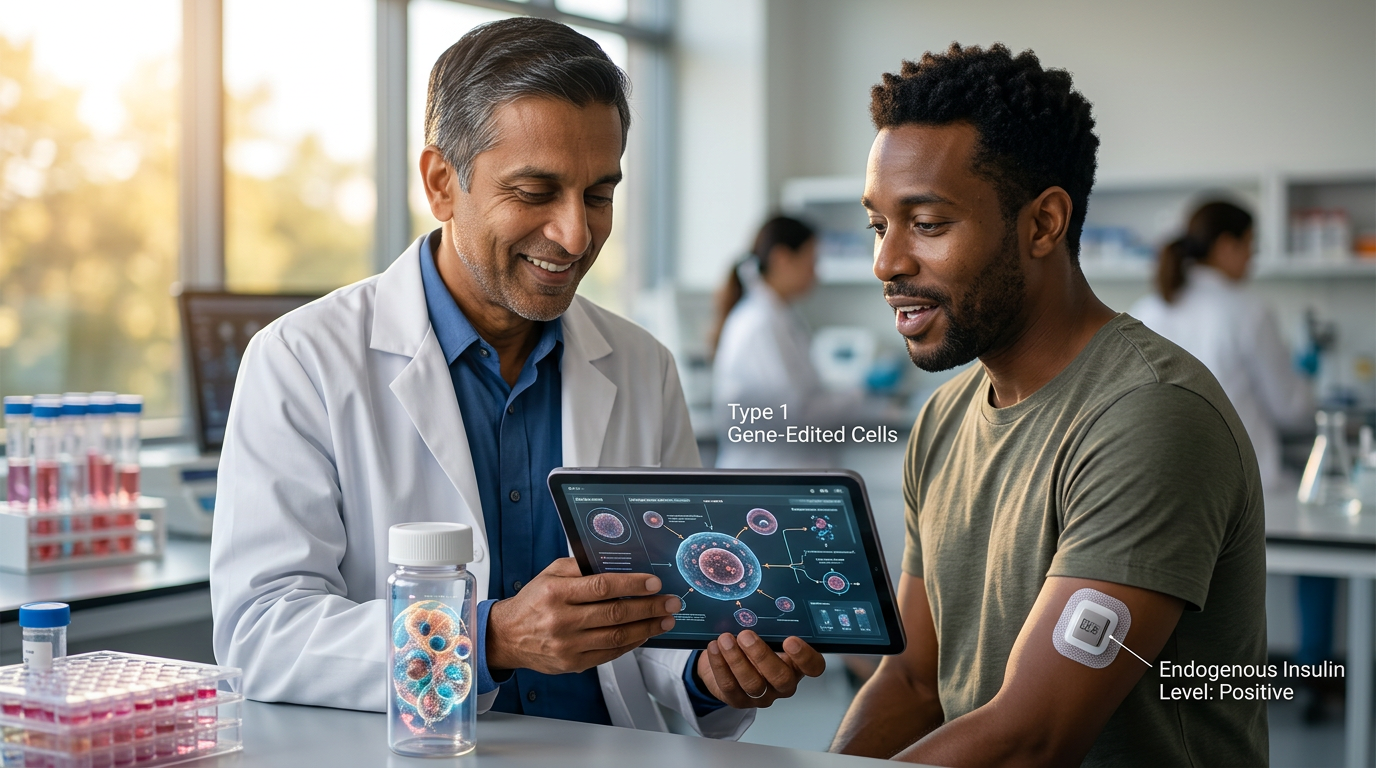
Swedish Breakthrough: Type 1 Patient Produces Own Insulin After Gene-Edited Transplant

Dr. Brian Karaan
Author
A New Dawn for Diabetes Treatment?
For decades, the standard of care for Type 1 diabetes has remained largely the same: constant monitoring, finger pricks, and life-saving insulin injections. But a revolutionary medical milestone out of Sweden is changing the conversation entirely. For the first time, a patient with Type 1 diabetes has begun producing his own insulin again following a transplant of lab-grown, gene-edited cells.
It sounds like something out of a science fiction novel, yet it is happening in real-time. Scientists have successfully bypassed the body’s autoimmune response, allowing these new cells to survive and function without the usual risk of rejection.
But before you celebrate the end of diabetes as we know it, there’s a catch. This procedure is incredibly complex, experimental, and years away from being available at your local pharmacy. This raises a critical question: should we be waiting for a laboratory miracle, or is there a more accessible way to support our glucose levels today? The answer might be found in your gut rather than a petri dish.
How the Swedish Breakthrough Works
In Type 1 diabetes, the body’s immune system mistakenly attacks the insulin-producing beta cells in the pancreas. Traditionally, transplants have been difficult because the patient's body would simply attack the new cells just as it did the old ones.
Research suggests that by using gene-editing technology (like CRISPR), scientists can essentially "hide" these new cells from the immune system. In the case of the Swedish patient, these lab-grown cells were transplanted and, within weeks, they began responding to blood sugar levels by secreting insulin naturally.
This is a massive step forward, but it highlights a massive problem: our modern environment is constantly at war with our metabolic health. While gene editing is a "top-down" fix, many experts are starting to look at "bottom-up" solutions that focus on the foundation of our biology.
Why We Can’t All Get Gene-Edited Cells (Yet)
While we all want a quick fix, the reality of gene-edited transplants involves:
* High Costs: These procedures are currently valued in the hundreds of thousands, if not millions, of dollars. * Long-Term Uncertainty: Studies show that while initial results are promising, we don't yet know how long these lab-grown cells will survive in the human body. * Surgical Risks: Any transplant involves invasive surgery and a grueling recovery period.
Most people struggling with blood sugar spikes aren't looking for a surgical overhaul; they want a way to manage their energy and health without their lives revolving around a glucose monitor.
How This Helps You: Taking Control Today
You don’t need a Swedish lab to start improving your metabolic health. Understanding the "Swedish Breakthrough" helps us realize that insulin production and glucose management are biological processes that can be influenced by our environment.
Research suggests that the health of your microbiome plays a massive role in how your body handles sugar. Instead of waiting for a high-tech transplant, many are looking toward biological shortcuts that support the body’s natural ability to process glucose efficiently.
Strategic Tip: Before reaching for the next "miracle" injection or waiting on experimental surgery, focus on your gut-to-blood sugar connection.
The Missing Link: Is the Answer in Your Gut?
We often think of blood sugar as a pancreas problem, but groundbreaking science is showing it’s actually a gut problem. Your gut bacteria send signals to your brain and pancreas to regulate how much insulin is released and how sensitive your cells are to that insulin.
Is the best treatment really a gene-edited injection? Or could a simple capsule do more for the average person? While the Swedish breakthrough is a triumph for Type 1 patients, those dealing with Type 2, pre-diabetes, or general insulin resistance might find that stabilizing the gut is a more effective—and much safer—route.
Many people are turning to GutGlucose to bridge the gap between their diet and their metabolic health. By targeting the enzymes that break down sugar, it’s possible to manage glucose levels without the side effects of intensive pharmaceuticals.
Practical Steps for Blood Sugar Stability
If you aren't ready for a gene-edited transplant, here are three ways to mimic the benefits of better glucose control naturally:
Conclusion: The Future is Here, But Is It For You?
The Swedish breakthrough is a testament to human ingenuity, proving that we are closer than ever to a world where diabetes is no longer a life sentence. However, for the millions of Americans navigating blood sugar issues today, a lab-grown transplant isn't a reality yet.
The real secret to metabolic health might not be hidden in a gene-editing tool, but in how we support our body’s existing systems. Why wait for a miracle when you can start optimizing your glucose response right now?
If you're looking for a way to support healthy blood sugar levels without waiting for a medical revolution, check out GutGlucose. It’s a simple, science-backed way to take the pressure off your pancreas and reclaim your energy.
These statements have not been evaluated by the Food and Drug Administration. This product is not intended to diagnose, treat, cure, or prevent any disease.
*
Want to stay updated on the latest health breakthroughs? Subscribe to our newsletter for weekly insights delivered straight to your inbox!


Comments (0)
Log in to leave a comment
No comments yet. Be the first to comment!

Dr. Brian Karaan
Dr. Brian Karaan, MD. Mayo Clinic alumni. Functional medicine physician in Denver, CO for 28 years. Spent 22 years developing the gut-based protocol that Harvard confirmed in 2024. Treated 4,000+ patients. Created Sugar Harmony to bring the protocol to everyone who needs it.
View all posts
The Gut-Glucose Connection: What Controls Your Blood Sugar More Than Anything You've Been Prescribed
- The 5 foods that secretly spike your blood sugar
- The gut-glucose connection Harvard confirmed in 8,000 diabetics — and your doctor never mentioned
- The 3 bacterial failures happening in your gut right now that no medication is fixing
- Dr. Karaan's 3-day gut reset protocol to stop the damage before it goes further
- The morning routine that prepares your gut to regulate glucose before your first meal
- Why metformin, Ozempic, and every diet you've tried were aimed at the wrong organ
- The natural compounds that target the root cause — not the symptom